

Medical Diagnostic All-in-One Motherboard: custom development around the installed product
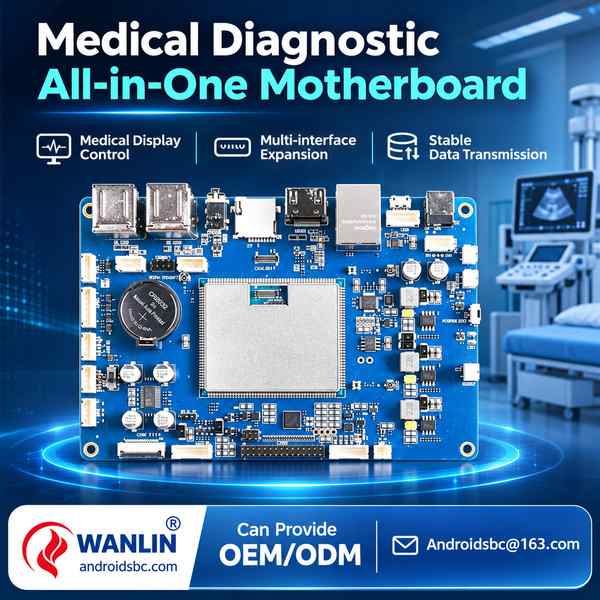
A medical diagnostic all-in-one motherboard provides the computing and interface platform inside diagnostic equipment operator workstations. For buyers planning equipment for Birmingham, United Kingdom, the development question is practical: control instrument data and software versions without implying clinical validation. Wanlin welcomes overseas brands, integrators and trade partners seeking a configuration that can be reviewed, sampled and prepared for manufacturing.
This article uses a proposed diagnostic equipment operator workstations project to explain the engineering decisions. It is a development briefing, not a report of a completed local installation. The regional focus identifies a buyer market; service coverage and local partners must be agreed for the actual project.
Wanlin Group publishes motherboard engineering resources under the WanlinSBC identity and directs product enquiries to AndroidSBC. Its published manufacturing process covers development review and production preparation. The agreed proposal determines the work undertaken for a particular product.
Read in 90 seconds: the product, the risk and the development route
Equipment: Medical Diagnostic All-in-One Motherboard development for diagnostic equipment operator interfaces and instrument-connected workstations. Start with the actual operator workflow and attached devices.
Acceptance objective: Control instrument data and software versions without implying clinical validation. Separate the responsibilities of instrument connection, operator application and release management.
Prototype exercise: Connect a test instrument or simulator, exchange a known non-patient dataset and restart the operator application. The software should preserve the agreed data association and access rules; this test does not establish diagnostic performance.
Project inputs: Provide documents for instrument interface, operator display and protected maintenance access, the application requirements, housing drawing, quantity forecast and destination.
Supply route: Compare an existing configuration, software adaptation and hardware changes before authorizing a new PCB. Request an itemized scope and sample plan.
Product overview: what customization must resolve
A custom medical diagnostic all-in-one motherboard should close a defined integration gap. The following work areas describe the required engineering and the evidence to obtain; they do not assert that any configuration has already passed these tests.
- Architecture and OS: Confirm instrument SDK, processor architecture and operating-system support before selecting a board. Deliverable: Obtain the actual SDK compatibility requirements and a proposed configuration.
- Instrument protocol: Document framing, identifiers, timeout behavior and loss-of-connection handling. Deliverable: Use a known test dataset to compare transmitted and displayed records.
- Access and records: Define roles, session handling and the equipment data policy. Deliverable: Check test-account permissions and record association without using patient data.
- Release control: Specify approved software, change review, recovery and regression requirements. Deliverable: Trace the tested image and application back to their release records.
- Mechanical integration: Define instrument interface, operator display and protected maintenance access against the housing and cable drawings.
- Release identity: Keep board revision, software build, application version and accepted accessories together.
- Service ownership: Assign hardware faults, application issues and field recovery to named project contacts.
Integration scenario: a proposed fault-and-recovery exercise
Illustrative engineering scenario: Connect a test instrument or simulator, exchange a known non-patient dataset and restart the operator application.
The software should preserve the agreed data association and access rules; this test does not establish diagnostic performance.
For the diagnostic equipment operator workstations prototype, record initial state, trigger, application and device events, visible result and recovery action. Repeat using the production-intent accessories. Any numerical limits should be agreed before testing, and results should be recorded after testing rather than invented for the article.
Root-cause analysis: investigate the responsible layer
The main integration risk in diagnostic equipment operator workstations spans instrument connection, operator application and release management. A motherboard replacement is justified only after the team identifies what is failing and which change can address it.
- Architecture and OS: Investigate the specific dependency: Confirm instrument SDK, processor architecture and operating-system support before selecting a board. Keep the observation separate from an assumption about the processor.
- Instrument protocol: Investigate the specific dependency: Document framing, identifiers, timeout behavior and loss-of-connection handling. Keep the observation separate from an assumption about the processor.
- Access and records: Investigate the specific dependency: Define roles, session handling and the equipment data policy. Keep the observation separate from an assumption about the processor.
- Release control: Investigate the specific dependency: Specify approved software, change review, recovery and regression requirements. Keep the observation separate from an assumption about the processor.
- Compare hardware revision, application version and attached-device firmware before reproducing a reported issue.
Development routes: choose the smallest change that meets the requirement
For the medical diagnostic all-in-one motherboard, compare configuration changes, software work and revised hardware against the actual integration gap. This avoids treating a new PCB as the default answer to an application or peripheral issue.
- Configuration review: establish the supported starting point for architecture and os.
- Software adaptation: define the system and application responsibilities behind instrument protocol.
- Interface review: check instrument interface, operator display and protected maintenance access for pinout, voltage, timing and software support.
- Hardware work: authorize schematic and layout changes only after the interface and mechanical requirements are recorded.
- Product preparation: agree identifiers, branding, programming and any required provisioning.
- Manufacturing release: approve the sample and define the change-control baseline.
Wanlin describes hardware and software adaptation in its engineering resources. Confirm feasibility, ownership of deliverables and charges in the project proposal.
Worked development brief: requirements and observable evidence
The following is a proposed acceptance brief for diagnostic equipment operator workstations; it is not a completed customer case. It gives the buyer and engineering team concrete review items instead of a generic promise of stable operation.
| Requirement | Development task | Evidence to obtain |
|---|---|---|
| Architecture and OS | Confirm instrument SDK, processor architecture and operating-system support before selecting a board. | Obtain the actual SDK compatibility requirements and a proposed configuration. |
| Instrument protocol | Document framing, identifiers, timeout behavior and loss-of-connection handling. | Use a known test dataset to compare transmitted and displayed records. |
| Access and records | Define roles, session handling and the equipment data policy. | Check test-account permissions and record association without using patient data. |
| Release control | Specify approved software, change review, recovery and regression requirements. | Trace the tested image and application back to their release records. |
Configuration requirements: define the board before requesting a price
The specification for a medical diagnostic all-in-one motherboard must connect the workload to its actual devices and software. This table defines enquiry inputs, not the specifications of an available finished board.
| Block | Requirement to define |
|---|---|
| Application | Diagnostic equipment operator workstations |
| Software baseline | Instrument SDK, architecture and OS requirements; do not presume Android or x86. |
| Connected devices | Instrument interface, operator display and protected maintenance access |
| Primary function | Confirm instrument SDK, processor architecture and operating-system support before selecting a board. |
| Secondary function | Document framing, identifiers, timeout behavior and loss-of-connection handling. |
| Workload and storage | Concurrent tasks, retained data, update space and required recovery behavior. |
| Mechanics and supply | Board outline, connector positions, power input and intended housing. |
| Acceptance | The software should preserve the agreed data association and access rules; this test does not establish diagnostic performance. |
| Production identity | Approved hardware, software, accessories and change-notification terms. |
System development: assign the integration and validation work
For diagnostic equipment operator workstations, responsibility must be explicit across instrument connection, operator application and release management. Ask the developer to identify which changes belong to the board, system software, application and external device; a working connector alone does not establish a finished capability.
| Function | Proposed engineering scope | Verification record |
|---|---|---|
| Architecture and OS | Confirm instrument SDK, processor architecture and operating-system support before selecting a board. | Obtain the actual SDK compatibility requirements and a proposed configuration. |
| Instrument protocol | Document framing, identifiers, timeout behavior and loss-of-connection handling. | Use a known test dataset to compare transmitted and displayed records. |
| Access and records | Define roles, session handling and the equipment data policy. | Check test-account permissions and record association without using patient data. |
| Release control | Specify approved software, change review, recovery and regression requirements. | Trace the tested image and application back to their release records. |
The operating system and computing architecture remain selection inputs for this project; confirm them against the instrument and application requirements.
This is a computing-integration proposal, not evidence of clinical accuracy, medical-device approval or suitability for patient use. The finished-equipment developer must establish its intended-use requirements separately.
Interface design: map signals and access against the equipment
The interface plan for diagnostic equipment operator workstations should prioritize instrument interface, operator display and protected maintenance access. A connector label is insufficient: the team needs electrical definitions, device documentation and a cable drawing.
- Obtain the actual device documents needed for architecture and os.
- Confirm connection and software dependencies for instrument protocol.
- Record voltage levels, pinout, cable length and any shared resources.
- Check board mounting and connector clearance in the intended housing.
- Reserve recovery access without exposing controls that operators should not use.
- Verify the required devices simultaneously, then repeat after restart.
Power and thermal validation: measure the installed workload
Test the specified computing and interface workload in the proposed housing; record electrical and thermal observations separately from clinical evaluation.
For the medical diagnostic all-in-one motherboard evaluation, log supply voltage and current where relevant, ambient and measured component temperatures, application workload and observed errors. Define the measurement locations and pass limits in the test plan. Compare the installed assembly with its intended environment rather than applying an unrelated board temperature claim.
Assembly and integration: preserve the accepted configuration
The accepted diagnostic equipment operator workstations assembly becomes useful evidence only when another unit can reproduce it. Keep a reference device and a release record that identifies its software and accessories.
- Inspect the physical connections used for architecture and os.
- Reproduce the accepted behavior for instrument protocol after final assembly.
- Include the required recovery check for access and records.
- Record power supply, cables, peripheral firmware and board revision.
- Identify the programmed image and application version.
- Store observed limitations and corrective actions with the release.
- Use the same acceptance fixture or documented method for the pilot.
Application priorities: turn each requirement into a different test
Buyers planning diagnostic equipment operator interfaces and instrument-connected workstations can use these priorities to avoid confusing a feature list with validated behavior. Final requirements should reflect the installed product rather than the market label alone.
| Priority | Why it belongs in this product | Review method |
|---|---|---|
| Architecture and OS | Confirm instrument SDK, processor architecture and operating-system support before selecting a board. | Obtain the actual SDK compatibility requirements and a proposed configuration. |
| Instrument protocol | Document framing, identifiers, timeout behavior and loss-of-connection handling. | Use a known test dataset to compare transmitted and displayed records. |
| Access and records | Define roles, session handling and the equipment data policy. | Check test-account permissions and record association without using patient data. |
| Release control | Specify approved software, change review, recovery and regression requirements. | Trace the tested image and application back to their release records. |
For a proposal serving Birmingham, United Kingdom, identify the installation language, network restrictions, service contact and spare-unit plan. These are project inputs, not claims of established local infrastructure.
Development workflow: move from review to a controlled release
The medical diagnostic all-in-one motherboard project should move through approved outputs, with the acceptance work for architecture and os and release control visible in the schedule.
- Approve the equipment brief and unresolved questions.
- Review candidate configuration and software compatibility.
- Separate engineering fees, prototypes, tooling and recurring unit cost.
- Review changed hardware and interface documents where applicable.
- Build samples and identify their hardware and software baseline.
- Run the proposed exercise: Connect a test instrument or simulator, exchange a known non-patient dataset and restart the operator application.
- Close critical issues and review pilot assembly and programming.
- Approve production scope, release identifiers and reorder change control.
Request separate milestones for feasibility, sample readiness, customer validation and production preparation. Component sourcing, software readiness and design changes can affect the schedule; no universal lead time or MOQ is asserted.
Manufacturer and overseas partner: agree the engineering and export boundaries
An importer seeking a medical diagnostic all-in-one motherboard manufacturer in China should connect the quotation to an identified configuration and a reviewable development scope. Trade partners can coordinate customer requirements, samples and export delivery while the equipment team retains clear approval authority.
| Responsibility | Customer or trade partner | Manufacturer discussion |
|---|---|---|
| Requirements | Provide the workflow for diagnostic equipment operator workstations. | Assess feasibility around architecture and os. |
| Integration | Provide documents and devices for instrument interface, operator display and protected maintenance access. | Identify hardware and software tasks. |
| Acceptance | The software should preserve the agreed data association and access rules; this test does not establish diagnostic performance. | Agree sample records and issue closure. |
| Export | State destination, importer and requested documents. | Agree delivery term, named place and shipment configuration. |
| After-sales | Collect device identity, logs and fault conditions. | Agree warranty, returns and escalation scope. |
Confirm confidentiality, design-file rights, software licensing, payment milestones and change-request handling before development begins. The delivery agreement should identify freight and clearance responsibilities.
Customer evaluation: build a reference from real project evidence
A useful reference for diagnostic equipment operator workstations explains the device configuration, integration problem, accepted change and observed support outcome. No customer endorsement or completed local deployment is claimed in this article.
Recommended review record: identify the configuration and explain how the team evaluated architecture and os and release control. Retain both passed tests and known limitations.
Project evaluation guidance, not a customer quotation.
Request a relevant reference where permission allows. Publish project results only after the customer authorizes the facts and wording.
Frequently asked questions
What does a medical diagnostic all-in-one motherboard do?
Answer: It supplies the computing and interface platform within diagnostic equipment operator workstations. Its suitability depends on instrument connection, operator application and release management working together in the intended configuration.
What should we send for a development enquiry?
Answer: Provide the application, documents for instrument interface, operator display and protected maintenance access, housing drawing, software requirements, prototype quantity, forecast and destination.
How should we evaluate architecture and os?
Answer: Confirm instrument SDK, processor architecture and operating-system support before selecting a board. Obtain the actual SDK compatibility requirements and a proposed configuration.
What recovery test belongs in sample acceptance?
Answer: Connect a test instrument or simulator, exchange a known non-patient dataset and restart the operator application. The software should preserve the agreed data association and access rules; this test does not establish diagnostic performance.
Does customization always need a new PCB?
Answer: No. A configuration or software change may address the requirement; electrical or mechanical changes may require revised hardware. Establish the responsible layer first.
How are development cost and schedule established?
Answer: Request itemized engineering, sample, tooling and unit costs with milestone assumptions. Include acceptance responsibilities and the handling of design changes.
What files and support should be agreed?
Answer: List the required design files, software deliverables, usage rights, signing authority where applicable, warranty and escalation terms in writing.
Can overseas trade companies coordinate the work?
Answer: Yes. Establish customer protection, engineering contacts and approval authority, then agree how the partner supports equipment delivered to Birmingham, United Kingdom.
Start the development discussion: send a focused equipment brief
Wanlin welcomes enquiries from equipment brands and overseas partners evaluating a medical diagnostic all-in-one motherboard. Describe the product you need to build and the integration issue to resolve. A focused brief helps establish which configuration can be supplied and which development tasks must be scoped.
Suggested email subject: Medical Diagnostic All-in-One Motherboard Development - Birmingham, United Kingdom. Attach the available drawings, device documents and application information; identify missing inputs rather than replacing them with assumptions.
Email: Androidsbc@163.com
Export service hotline: +8613261677119
Website: https://www.androidsbc.com
Published by: Wanlin Group
Company address: Wanlin Group, Building B, Building 1, Beisida Medical Device Building, 28 Nantong Avenue, Baolong Community, Baolong Sub-district, Longgang District, Shenzhen, Guangdong, China
Published on: November 4, 2026
Source note: Development descriptions are informed by public manufacturer resources. Scenarios, tasks and acceptance methods are proposals, not claims of completed tests or customer results.
References: Hardware development and manufacturing process
Contact: Androidsbc@163.com | +8613261677119 | https://www.androidsbc.com